we see that the fraternal nation-state is organised to promote political homosocial relations among men in order to discourage and prohibit homosexual relations between men. (Puar, 2007: 49)
And those two people that went down are patriots, and we love them. And because of them we ended up with some good music. Right? Right. So play YMCA Go ahead, let’s go. Nice and loud! (Trump, 2024)
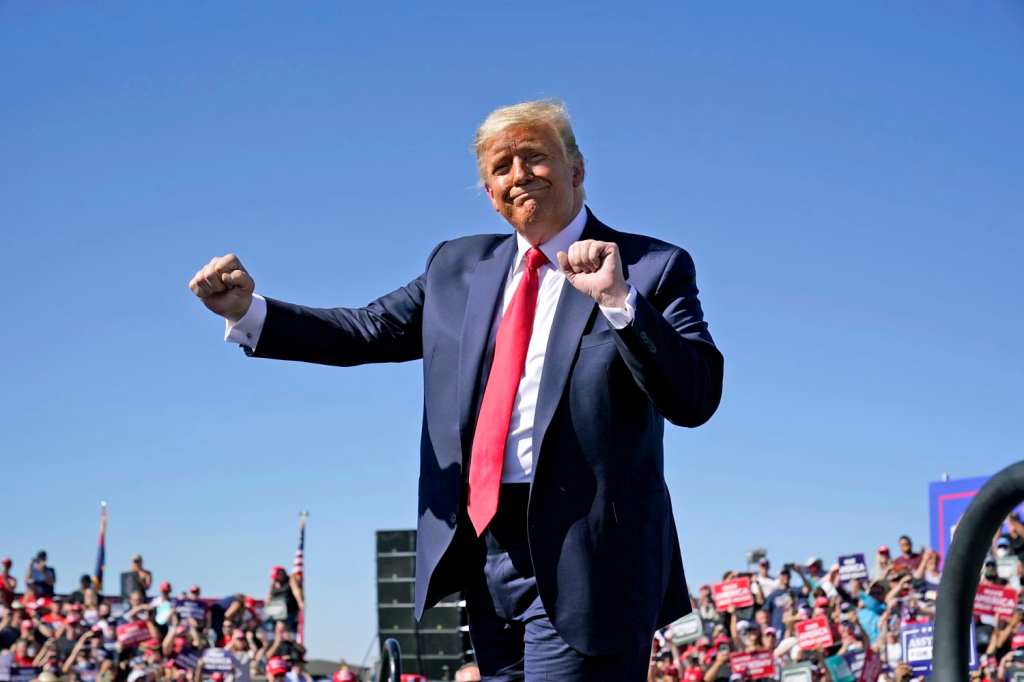
In 2024, Donald Trump spent half an hour dancing on stage at a campaign rally after two attendees collapsed from the heat in the venue[1].
His favourite songs were played, including the (now infamous) favourite of his, YMCA by Village People. This isn’t the only one of their songs Trump admires—Macho Man and In The Navy are both songs he fervently enjoys. On the eve of Trump’s second inauguration, Victor Willis (the last remaining survivor of the band) performed alongside five other dancers dressed as the band members from the music video[2].
Within days of the inauguration, Trump began the obliteration of trans legal recognition and rights in the US. Until recently, if you were a man who had associated yourself with these songs, you might have received concerning attention around your sexuality. These songs have been widely positioned as queer—the band members having initially been conceptualised as gay fantasy icons, and the songs unashamedly overt in idolising male bodies, a 1970s U.S. neoliberal multiculturalism, masculinity, and homoeroticism. The band has changed their opinion on whether they appreciate the queer positioning of their music over the years, even though their name refers to the gayborhoods of Manhattan, and YMCA was released on the album with a song called ‘I’m a Cruiser’[3]. Many find it difficult to square this camp, homoerotic track with its new signification of the fist-pumping dance of far-right Trumpism. How is it that such a fundamentally queer-coded song comes to be the anthem for MAGA politics?
I want to lay out a few of my thoughts on why YMCA has come to be such an important tool for Trump’s fascistic politics, for US sexual exceptionalism, and what it says about the importance of queerness in broader nationalism. If it works, I might consider expanding this further elsewhere.
Music across cultural politics:
The first thing to mention is that nothing is inherent in music. Music is what we listeners make of it. But music is also political. The lyrics of love stories, the use of electric guitars or mellow lo-fi beats, produce different feelings that we interpret as a result of co-constructed ways of reading music[4]. This both makes music incredibly powerful because of its subjectivity—we experience different musics differently thanks to our memories, experiences, opinions. It also makes music an incredibly useful and productive political vehicle.
Social and political movements often use music to rally around—chants or national anthems can make us feel part of a collective[5]. Music can signify certain groups of people, from punk subcultures to entire nations. One example might be the Eurovision Song Contest—a Western competition between (Western-affiliated) countries across the world, laced with liberal multicultural rhetorics of ‘unity’ across cultures and values through music[6]. We can also see this through the National Recording Registry in the US, which records “the evolving playlist of the American soundscape”[7]. In 2020, YMCA was awarded the status of “culturally, historically or aesthetically significant” to US culture. As anthropologist A. Jamie Saris points out, the song that “once made middle class white America uncomfortable” is now performed “in front of an audience packed with homophobic members of suburban Evangelical churches”[8]. It absolutely has, as Saris argues, been deployed with a veneer of the past, a so-called ‘better time’ pitched to older Trump supporters. But whether or not Victor Willis ever intentionally wrote YMCA as a queer-coded song, people have consistently redefined it through that frame since[9].
I think this newly-captured MAGA anthem is doing more than attempting to hark back to a mid-20th century nostalgia. While “[culture’s] representations have their roots elsewhere: in a golden past, in a utopian future”, they are also invoked “in the captivating unfamiliarity of “primitive” societies, of the “folk,” the “people,” the anthropologically different” (Middleton, 2011: 6). What is Trump doing with this song particularly? What is he projecting into the future with YMCA? How is YMCA bolstering an environment of inclusion and exclusion that Trump leans into to secure his politics? For this, it’s worth taking a look at Jasbir Puar’s work.
Puar’s homonationalism and YMCA:
Puar’s (2007) Terrorist Assemblages: Homonationalism in Queer Times explores the ways that queerness has been enveloped into statecraft. Insidiously welcomed into the norm, queerness has been particularly important for the US to position itself globally as a tolerant society so as to Other certain nation-states across the world for their lack of acceptance of queerness. The enveloping of queerness into statecraft is what Puar calls homonationalism, whereby the liberal tolerance of LGBTQIA+ people is redeployed by an ‘exceptional’ state to produce abject nations that ‘reject’ queerness, abject sexual subjects deemed to be threats to the nation, and reproduces orientalist and racist discourses. They argue that like the ways that nationalism invokes fraternal bonds, “the fraternal nation-state is organised to promote political homosocial relations among men in order to discourage and prohibit homosexual relations between men” (2007: 49, emphasis added). Heterosexist politics sanctions homosociality—or the form of male bonding that is driven by a fear or hatred of homosexuality[10]—in order to name, produce, and criminalise homosexual desires and bodies deemed as deviancies. Therefore, Puar argues that
If we are to take seriously the proposition that the nation is at once familial and fraternal, homosocial fraternal relations exist both to reiterate the centrality of the heteronormative family and to act as a stopgap preventative measure—a consolidation for the prohibition of homosexual relations. (2007: 49-50).
In other words, homosocial relations maintain the status quo or the norm of the heterosexual matrix[11]. Puar’s words still ring largely true today, despite having written this book before the more recent active public ridicule and moral panic around trans bodies over the last 10 years or so. This shift in political tolerance of trans bodies (as if trans bodies were ever truly accepted anyway) might be argued to suggest that queerness is becoming less important in demonstrating a sexual exceptionalism—the ability for the US to place itself on a pedestal as a liberal and tolerant state for queers in a way that justifies violent neocolonialism across the world. As we know, trans people have not only become subject to more intense physical and verbal violence as a result of moral panics, but have also become subject to systematic erasure across the legal system through the reverting of legal documents like passports to their gender assigned at birth[12].
I would argue, however, that Puar’s argument continues to ring true. Trump’s anti-trans politics is the maintenance of US sexual exceptionalism by further enveloping homoerotics into the norm. If, as Michael Warner argues ,“the ability to project those erotic bonds onto a marginal figure — the stigmatized body of the homosexual — has been crucial to the creation of modern homosociality, which in turn has inflected class identity and male domination” (1993: xiv), in turn I suggest that the promotion of homosocial desire is the strengthening of heterosexist norms at the expense of gender non-conformity.
The quote I began with is important to demonstrate in full—during the campaign rally in 2024, two supporters collapsed due to the heat in the venue. Doctors were called in, crowd members collectively fanned the individuals on the floor, and everyone cheered when the supporters were escorted out of the venue. Trump not only thanked the doctors, but called the two supporters “patriots”. Following this, he called on the DJ to play YMCA “nice and loud!”. The invocation of the word patriot, followed by him dancing to the song, speaks not only to the importance of national identity in Trump’s project (and broader US culture), but it also ties YMCA and the performance(s) of the song into a nationalist politics. The fanfares at the beginning of YMCA evoke an American high-school brass band performance, an embrace of the exceptionalism, thoroughly optimistic and loud and proud. The opening line of “Young man” alongside the optimistic up-tempo beat is perhaps an implicit call to Trump’s (performative) virility. There is an attempted humour here that portrays Trump as loveable, as self-aware, or in touch with the masses. But lines in the song like “They have everything for young men to enjoy / You can hang out with all the boys” (3:00) and “Stay there and I’m sure you will find / Many ways to have a good time” (0:35) evoke images of an excess of homoerotic pleasures to bathe in—everything and all—and hint to the possibilities for young men to experiment behind closed doors. Switching to the pre-inauguration performance, the burly men dancing (in an aggressively happy way) beside Trump are symbols of an American masculinity that Trump determines to be hegemonic. These masculine figures on display are specifically curated—the empty signifiers of difference to demonstrate a liberal multiculturalism, the characteristically American figures of the Indigenous American or the cop dancing side by side[13], and able-bodied muscle-laden, moustache-sporting male bodies that champion a white Western understanding of masculine beauty. The blatant display of homoerotic icons dancing next to Trump—the ripped builder, the leatherbound cowboy, etc—is the attempt to reconfigure a queer masculinity so often othered as deviant, and becomes a way to guard, to strengthen, and to hold onto a stabilised hegemonic masculinity that Trump continues to argue is threatened by the existence of trans bodies.
“You can hang out with all the boys” (YMCA – Village People, 3:00):
We are witnessing the continuation of violence that became normalised under successive Democrat and Republican presidencies (except that Trump is unafraid to wear this power unashamedly): student activists are being actively disappeared by undercover police officers, detention centres are being expanded to imprison migrants indefinitely, trans peoples’ legal recognition of their genders are being erased, Israel is being given full reign over the destruction of Palestinian lives and livelihoods, the education department is being abolished, and academic research is being scrubbed.
But it’s fun, isn’t it, to stay at the YMCA? Donald Trump seems to think so. Surrounded by men, down on their luck, looking for a warm bed and someone to take compassion on them. Sounds a bit gay, no? Well, for Trump, it kind of is—the necessity to envelop a homoerotics into his fascistic project is the attempt to police, shut down, and stoke fear through queerness as much as it is to promote a homosocial desire between men. What appears to be a funny ‘bit’, the performance of YMCA by Trump on stage, is in fact a deeply political project in which the othering of queer and racialised bodies are front and centre. Trump’s fist-clenched dance moves to YMCA are the attempts to encapsulate the bonds between men for his fascistic aims.
[1] You can watch the highlights here: https://youtu.be/PIZZ-dvkYyA
[2] The full performance is here: https://www.youtube.com/watch?v=ptTc17stBkw. There is something haunting watching the song’s use in the context of the next Trump presidency. Lyrics like, “There’s no need / To / Be / Unhappy” land uncomfortably in the neoliberal hellscape that has eroded living and working conditions, privatised state infrastructure for maximum profit, and demanded that individuals treat themselves as brands to be marketed, optimised, and made more efficient. For more in-depth interrogations of this, see Ahmed’s (2010) The Promise of Happiness, and Berlant’s (2010) Cruel Optimism.
[3] Victor Willis recently stated that the song was never inherently gay, and anyone who said so would be sued. See https://www.theguardian.com/music/2024/dec/05/ymca-has-never-been-gay-says-the-songs-lyricist-and-singer. For an interesting overview of the song’s history, see here: https://www.britannica.com/topic/Y-M-C-A-song#ref396317.
[4] I use reading here in the cultural studies sense of reading texts. In this framing, any cultural material is a text that can be read for its underlying discursive meanings, constructions, and contradictions. For an introduction into analysis of pop music, see Frith (1989) “Why do songs have words?”.
[5] Many have explored these themes in the past, but I particularly like Eyerman & Jamison’s (2011) chapter called “Structures of feeling and cognitive praxis” in Music and Social Movements.
[6] See Scheding (2025) Sounds across borders and the Ukraine war in: Anderson’s Rethinking Migration: Challenging Borders, Citizenship and Race. In this, he argues for a greater interrogation of the ways “sound moves across borders and how it is bordered and either encouraged to, or prevented from, ‘migrating’”.
[7] Among the 800 nominations, 25 songs were deemed to have the cultural, historical and aesthetic importance to sound heritage. You can find them here: https://www.loc.gov/item/prn-20-023/
[8] See Saris’s piece here: https://www.maynoothuniversity.ie/research/spotlight-research/why-donald-trump-dancing-ymca
[9] It is also worth stating that they did not actively denounce this when the song was first released since it garnered such a positive response. For more on queerness as scavenging, see Halberstam’s (1997) Female Masculinities and (2005) In a Queer Time and Place.
[10] Eve Kosofsky Sedgwick fully conceptualised the term homosocial in Between Men (1985)
[11] The heterosexual matrix is a concept formed by Butler to understand how heterosexuality becomes naturalised. It is a linear understanding that someone born with a vagina is therefore gendered a woman and must be attracted to men, and vice versa.
[12] This process, which came into effect in January 2025, has been creatively called “Defending Women from Gender Ideology Extremism and Restoring Biological Truth to the Federal Government” https://travel.state.gov/content/travel/en/passports/passport-help/sex-marker.html
[13] As though these archetypes have lived side by side in harmony, skirting over the historic and continual visceral racial violence and oppression the police enact over Black, brown, and Indigenous communities in the US. On US Indigenous resistance, see Leanne Betasamosake Simpson (2017) As We Have Always Done, and on US Black political resistance and police abolition see Angela Davis (2003) Are Prisons Obsolete? here: https://decolonisesociology.com/wp-content/uploads/2019/03/angela-davis-are_prisons_obsolete.pdf


Leave a Reply